Role
Date
Stage
Industry
REVENUE
Introduction

Search
Brands had no reliable way to get real performance numbers out of the creators they worked with — they asked for screenshots and hoped they hadn't been retouched. So we did it differently.
Fohr ran on authenticated accounts. Creators connected Instagram, Facebook, YouTube, wherever they posted, and the platforms reported the real numbers.
They connected because it was worth something to them. The influencer economy was already full of inflated followings, and honest creators were being priced against people buying theirs. Authenticating was how you proved you had nothing to hide.

Fohr Verified worked by scoring every follower — their follower/following ratio, post count, bio, link — and then charting an influencer's audience to get a clearer picture of how many were real, and how many were bots.
It got picked up in the press, which got Instagram's attention. They asked how we were calculating it and so we told them, with 100% transparency, exactly how we executed it while abiding by their API terms of service. The following week they removed follower lists from the API.
So we rebuilt it from the outside. Likes and comments measured against follower count and industry averages, plus comment analysis to sort the real ones from the bot-driven. We couldn't see the audience anymore, so we read the evidence it left behind.
Fohr Verified
Verification became the thing brands filtered on. Not follower count, not category tags, not what a media kit claimed — whether the audience behind the number was real. Forty-six percent of creators on Fohr earned it, and a brand could search that way: verified reach only, everyone else invisible.
Reporting
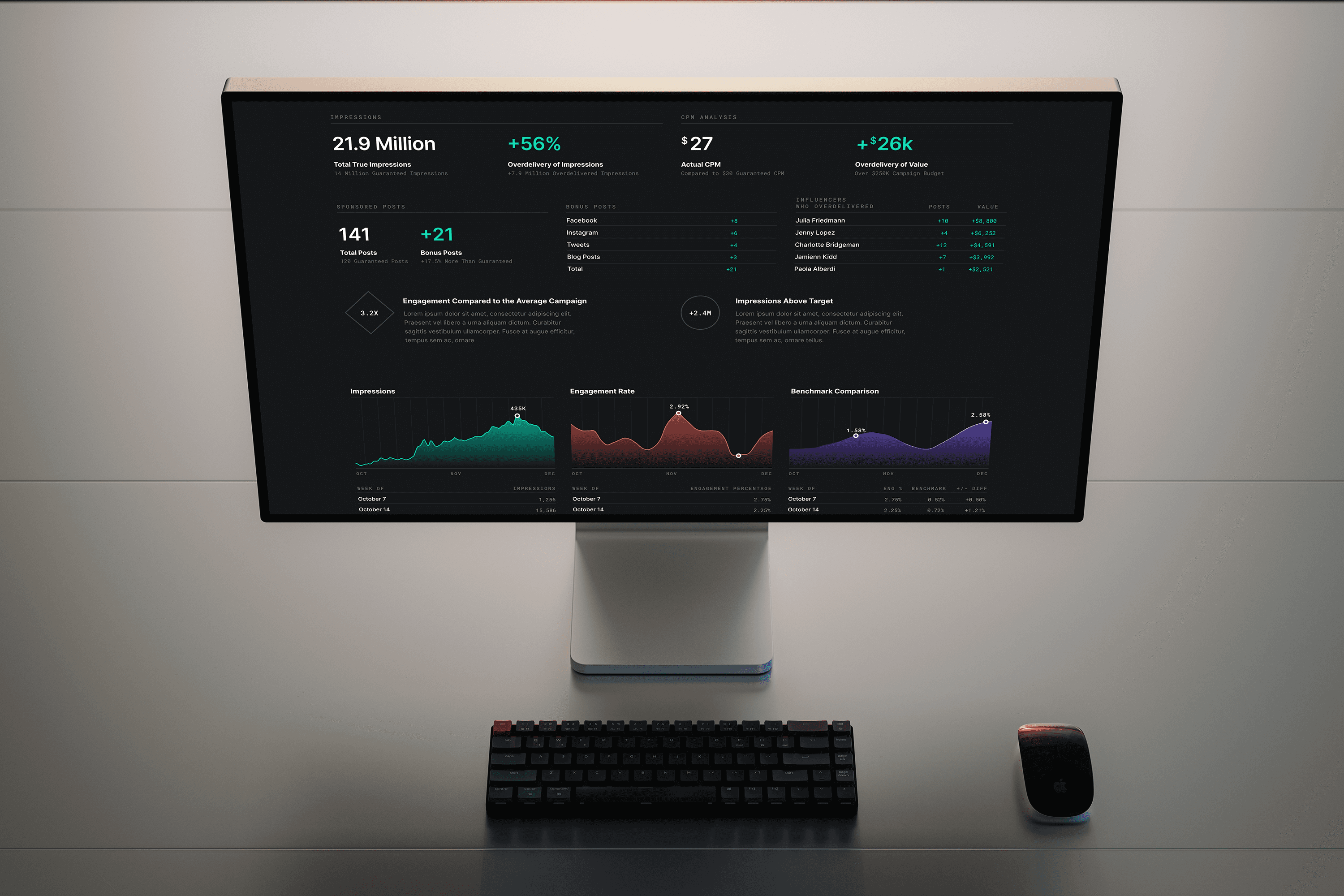
Everyone else waited for a campaign to end and asked creators for numbers. Because Fohr ran on authenticated accounts, we didn't have to ask. Posts, reach, engagement, every platform, live as it happened — a trustworthy window into a campaign while it was still running, straight from the source.
When it ended, brands needed two things that didn't fit together. One was for the people they answered to: topline numbers, the best of the content, something they could forward without explaining. The other was for themselves: every creator, every post, sorted however they wanted, because that's how they decided who to work with on the next campaign.
Most tools built one or the other. We shipped both in the same report.
Outcome
I co-founded Fohr in 2011 and led product for seven years, building what Sephora, Estée Lauder, Ralph Lauren, and Tommy Hilfiger used to find, brief, and measure creators at scale.
What I built kept growing after I left. Fohr scaled to more than $50M in revenue on $1.25M raised, and remains independent.
In collaboration with
James Nord
Co-Founder & CEO
Grace Murray
Account Executive
Emma Hetherington
Account Executive
Cameron Barker
Head of Engineering
Andrew Miksch
Lead Engineer
Annie Soderstrom
Product Manager
Sky Monaco-Tan